
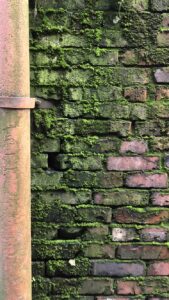
Air smells of memory. Of that I am sure you will agree. Air, in collaboration with brick or stone, now that smells of history. Do you know that the brick and stone of my current home town in rural Australia smells 100% different to the brick and stone of Sydney? Or Melbourne? Or Ireland? Or Paris? All different.
Of course I am momentarily romantic. I know about the famines and the revolutions and the fog and the rain but I am not talking of streets drenched in blood and disease-bearing rats biting open sores in the night when the children hide in the alleys and the sewers for safety and fucked who they had to for pennies. or when the air raids bombed the above ground to smithereens while those who could hid in the caverns of pointless railways. No…
The scent depends on age and the air but with stone it’s different. Stone is earth and, and the years – no, the eons – in which it has dwelt. Brick before the 1950s had heart and you could always tell brick from King George III who shipped the slave labour, called convicts, everywhere, through the reign of Queen Victoria, when bricks made up the primmest of schools—terrifying in their right-handedness.
After the 1950s brick became crude and graceless. Blonde. Meant to co-exist with venetian blinds and twin-tub washing machines. Hand-made brick from two hundred years ago? Priceless! Because it is the brick of chimney pots and slate roofs, of poverty, but laughter, when bread was baked at home and aprons were examined in haberdasheries like Versace is today.
Stone, on the other hand, can be intimidating but only in the wild. In the cities it is highbrow or government or cobble or fortress. I love stone that has collaborated with people for a while. It gets built into the pyramids of Egypt, and Baalbek, and the Black Fort on Inish Mór, Göbeklitepe and the Temple of the Sun.
Old bridges smell best of all, equal only to barnacle-encrusted stone jetties that have tales to tell of seagulls and sou ’westers and hard men that left widows on the Irish west coast.
The stone of abandoned, one hundred easy year old buildings is orgasmic. Or else it reminds us of asylums and prisons. There are stories in these. Romantic anxiety. Skin cells of the long dead. Ghosts of pick-pockets and refugees, of hangings and lobotomies for speaking out.
Brick forms walls to keep us caged or keep the predator out. Which is which is the question.
I remember when a car park in New York was razed to the ground and the bones of hundreds, buried at the slave markets, were exposed to be wept over by Africa. Bones are stone in the hearts of their descendants who never have heard the word sorry.
Smell instructs.
Ergo we must smell our architecture.